Saint-Roman and La Rousse: living on the heights of Monaco

Published on:
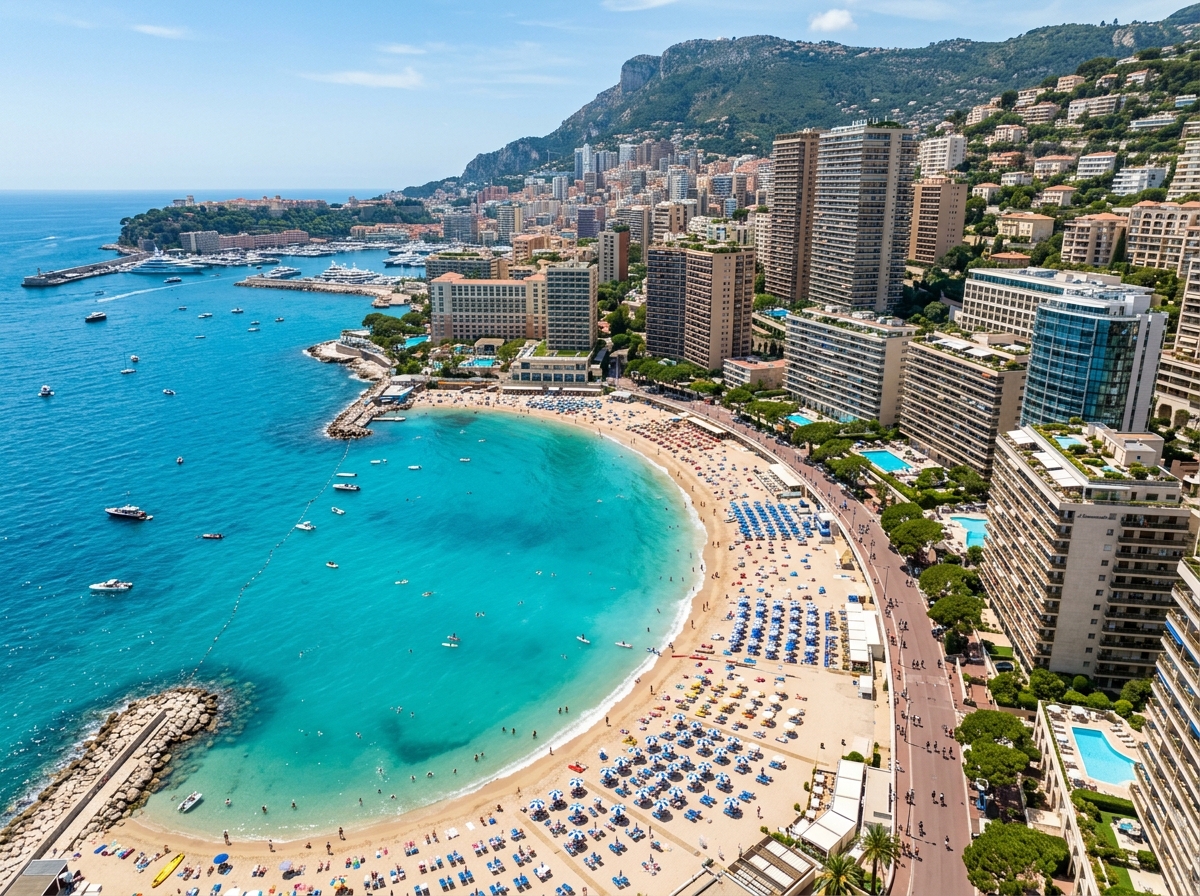
In the north-east of Monaco, the Saint-Roman district combines altitude, discretion and panoramas over the Mediterranean. An exceptional residential area, between La Rousse and Roquebrune-Cap-Martin, where large high-rise apartments dominate the coastline.
At the north-eastern tip of Monaco, on the border between the principality and Roquebrune-Cap-Martin, the Saint-Roman district in Monaco occupies a unique position: that of a residential enclave of character, facing the sea and preserved from traffic. For those looking for a Monegasque address away from the hustle and bustle, Saint-Roman often stands out as a silent evidence. The exceptional properties on offer there reflect a philosophy specific to this sector: discretion of façade, generous spaces, and views that nothing can dispute. It is a part of Monaco that is earned — one does not cross it, one chooses it.
A geography that shapes the character of the place
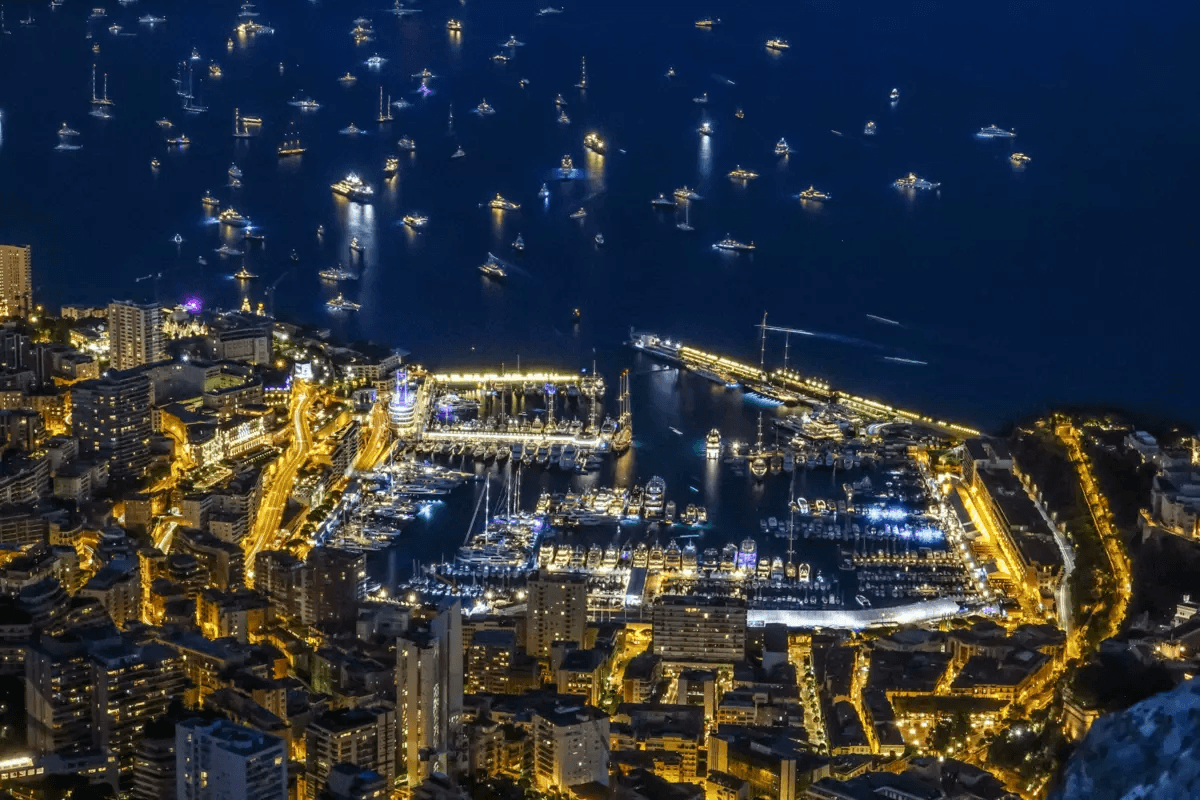
To understand Saint-Roman, you must first understand its position in the Monegasque grid. The district unfolds on the heights of north-eastern Monaco, where the territory narrows before touching the French border. To the west, you can see the roofs of Monaco-Ville and the waters of the port. To the north, the hills of Roquebrune-Cap-Martin form a natural, gentle and wooded horizon, which contrasts with the minerality of the seafront.
This situation gives the district a dual nature: it belongs fully to Monaco, with all that this implies in terms of institutional framework, security and quality of infrastructure — but it also benefits from a relative serenity that more central districts cannot offer. The density is lower, the streets calmer, and the residents often attached to a form of chosen withdrawal.
The constant care given by the Government of Monaco to public spaces and local facilities is particularly visible in this sector — roads, lighting, vegetation — everything bears witness to a standard of maintenance that corresponds to the expectations of its resident population.
Saint-Roman and La Rousse: a territory in natural continuity
In common parlance, the names are willingly mixed: we speak indifferently of La Rousse Saint-Roman, Rousse Saint-Roman, or simply La Rousse to refer to this north-eastern Monegasque sector. This toponymic confusion is not accidental: the two entities share a real urban continuity, a same elevation, a same orientation, and a same residential clientele.
The La Rousse district is the immediate neighbor of Saint-Roman, and together they form what insiders simply call "the north." A north which, in Monaco, is in no way a hinterland: on the contrary, it is a sought-after area, precisely because it escapes the hustle and bustle of the seafront and tourist routes. Residents move between beautifully crafted buildings, well-kept gardens and terraces open to the open sea.
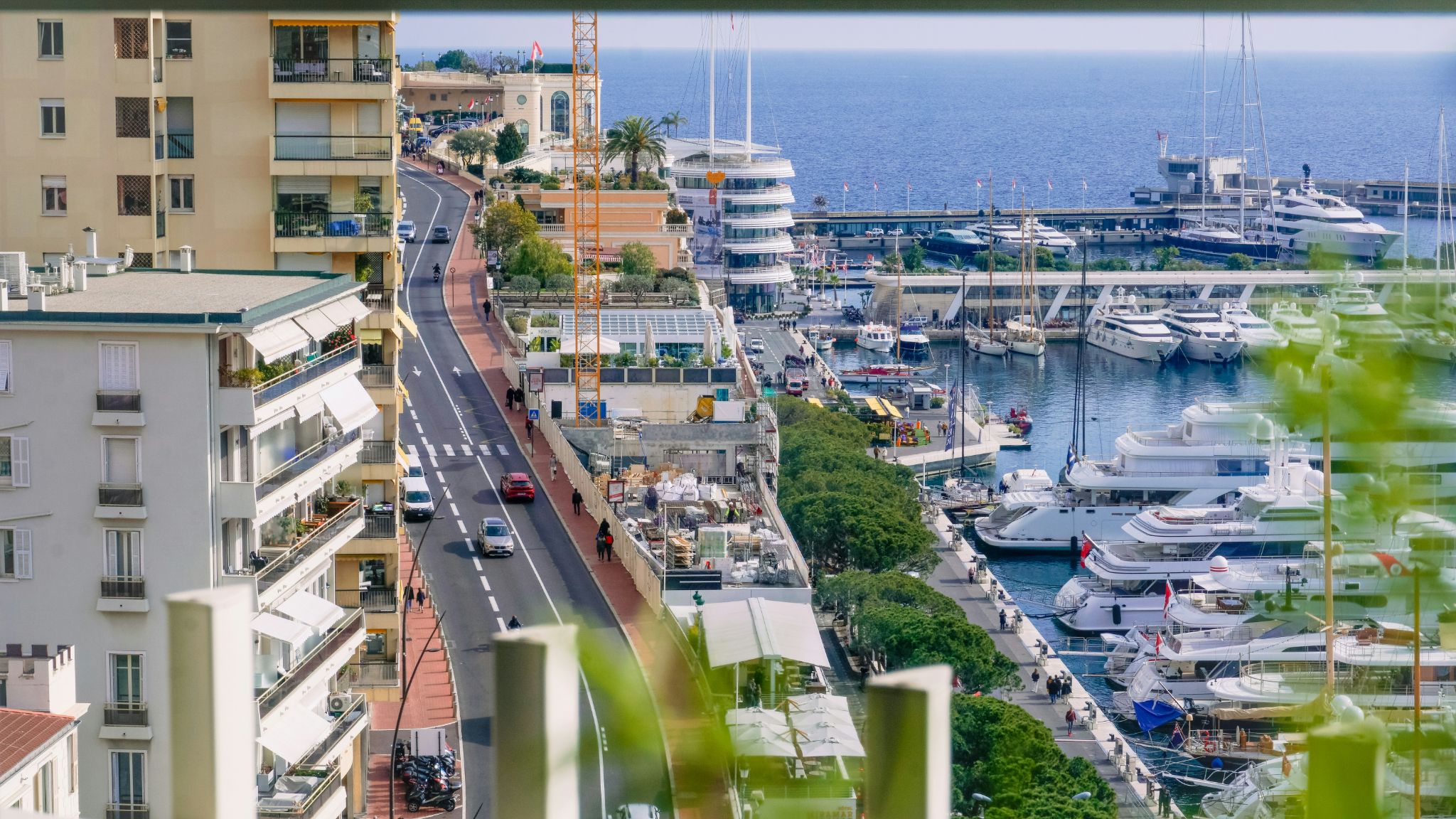
If you explore the real estate of La Condamine, you immediately measure the difference in tone: where La Condamine vibrates with port and commercial activity, Saint-Roman cultivates a good-natured restraint. Each district of Monaco has its own logic, and that of Saint-Roman is that of height — literally and figuratively.
Emblematic residences in the district
La Rousse–Saint Roman groups together several well-known residences, including the Parc Saint Roman and the Château Périgord. This page remains deliberately focused on the district; the characteristics, services and typologies of each residence are detailed in dedicated guides.
Panoramas that define an address
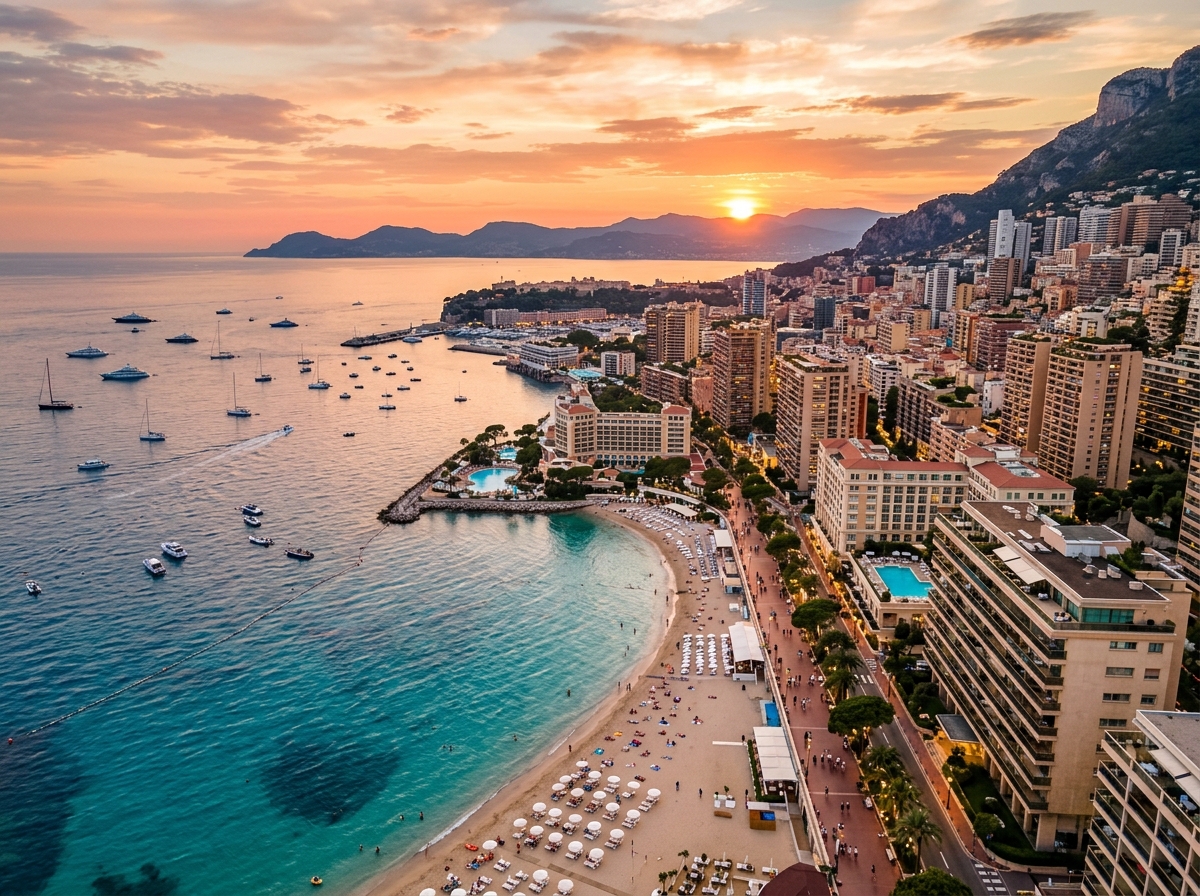
In Saint-Roman, the view is not one amenity among others: it is often the primary reason for the choice. The high-rise apartments offer perspectives that extend over the Mediterranean as far as the Corsican coasts on a clear day, over Mount Agel to the north, and over the urban fabric of Monaco below — a panorama that synthesizes, in a single glance, all that the principality can offer.
The beaches of Larvotto are visible from the upper floors of the district's buildings, drawing an arc of sand and water at the foot of the principality. This visual proximity to the sea, without the noisy immediacy of the seafront, is precisely what many residents look for: the presence of water without the passing traffic.
In times of mistral or tramontane wind, the sky above Saint-Roman reaches a rare clarity. The evening lights on the Italian coast remind us that Monaco is also a Mediterranean crossroads, looking towards two countries and two ways of living on the shore. This double belonging — Monegasque and Mediterranean — gives the district a depth that numbers alone cannot translate.
Architecture: between grace and asserted modernity
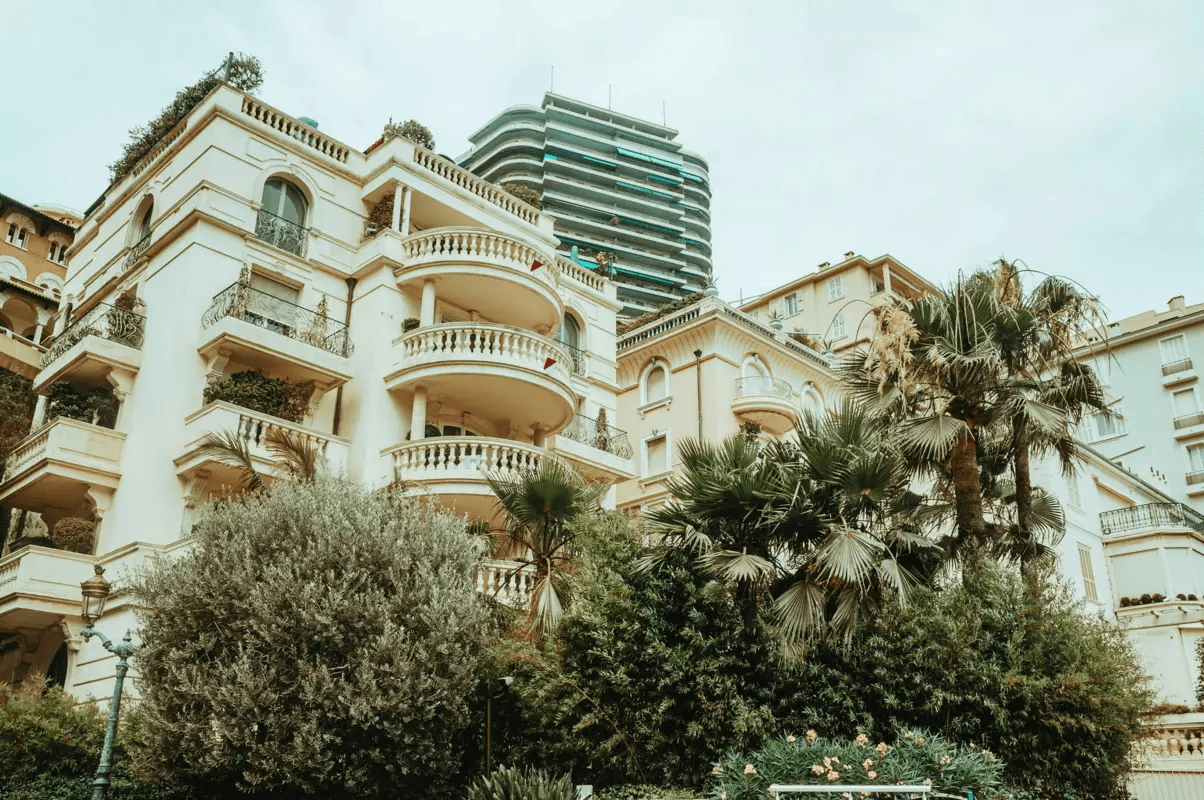
The architectural landscape of Saint-Roman blends several generations of construction. The buildings of the 1970s-1980s, massive and well-proportioned, sit alongside more recent achievements that have integrated the lessons of contemporary architecture — wide terraces, glazed facades, noble materials. Modernity does not seek to erase the past here, but to extend it with elegance.
Among the visual landmarks of the district, the Château Périgord imposes its classic silhouette, reminding us that Monaco has preserved a few buildings from another era amidst its contemporary density. Not far away, the Odeon Tower, visible from almost all of Monaco, marks the entrance to the north-east of the principality with its slender profile and symbolizes the architectural ambition of a city that constantly reinvents itself.
The Monte Carlo Sun is another reference address in this sector, appreciated for its volumes and for the services it offers to its residents. These large-scale developments coexist with smaller-scale buildings, where only a few apartments share a landing — a configuration less frequent in Monaco, and therefore all the more sought after.
Monegasque verticality is sometimes spoken of as an assumed challenge: skyscrapers are not an exception but a logical response to the scarcity of land. In Saint-Roman, this verticality is tempered by the horizontality of the views — as if the height of the buildings served above all to amplify the extent of the gaze.
The Monte-Carlo Country Club and the art of living on high
A few hundred metres from Saint-Roman, the Monte Carlo Country Club embodies the very best that Monégasque residential life has to offer. This legendary club — whose tennis courts overlook the Mediterranean — is frequented by local residents as a natural extension of their address, a space for discreet and sophisticated social life, far from the tourist tracks.
The proximity to the Monte Carlo Country Club says a lot about the profile of Saint-Roman's residents. These are people who have chosen Monaco not for its hustle and bustle, but for the quality of a quiet, secure daily life, equipped with first-class amenities. The club, the restaurants of Cap-Martin, the coastal paths between Monaco and Menton — all of this forms a coherent and enviable living territory.
Residents of the district also appreciate the proximity to Roquebrune-Cap-Martin, which offers an escape to more open spaces, Provençal markets and a certain Mediterranean slowness. This porosity between the Principality and its French hinterland is a precious feature of Saint-Roman, often mentioned by those who have lived there for several years.
Saint-Roman compared to other Monaco districts
Monaco is a principality of 2.02 km², and each of its districts has its own market. Where Monte-Carlo concentrates the most exposed addresses — major hotels, the Casino, galleries —, Saint-Roman offers a different tone. People do not come here to be seen: they come to see, and to live in serenity without being far from the centre.
Compared to Fontvieille real estate, Saint-Roman stands out for its resolutely residential orientation and its sea views. Fontvieille, built on reclaimed land to the west, has its own identity — more industrial and commercial — whereas Saint-Roman cultivates altitude and peace. Two philosophies, two clienteles, two ways of being Monégasque.
Data published by the Principality's official statistics regularly confirm that residential demand in the principality remains sustained by an international population, a significant portion of whom choose the higher districts for their living environment. Saint-Roman is fully part of this dynamic, driven by the scarcity of properties and the stability of a client base that thinks long-term.
To explore penthouses in Monaco or to understand price trends in the Monégasque market, it is useful to note that Saint-Roman often represents the area where larger properties — four rooms and above — are most common, making it a sector naturally geared towards families and long-term residents.
What Saint-Roman residents are concretely looking for
The profile of buyers in Saint-Roman is quite consistent: they are often people who already know Monaco, who have sometimes started with an address in Monte-Carlo or La Condamine, and who are looking to move towards something more stable, more spacious, and quieter. The first acquisition is often motivated by professional proximity; the second — often in Saint-Roman — is motivated by daily well-being.
The district's apartments stand out for their surface area: in a principality where the square metre is among the most expensive in the world, finding a four-room apartment with a terrace and unobstructed view is almost an exception. Saint-Roman is home to several of them, notably in the large complexes of the 1980s whose generous volumes would no longer be buildable today.
Discretion is a fundamental criterion. Residents share an implicit pact here: no noise, no superfluous ostentation, a mutual respect for space and silence. This is perhaps, ultimately, what defines Saint-Roman better than any other measure: a residential community that has chosen Monaco for what it offers, and not for what it allows to be displayed.
An address for the long term
Taking up an address in Saint-Roman is a choice that goes beyond a simple real estate transaction. It is choosing a way of life, a relationship with Monaco different from that offered by the city centre or the seafront. It is preferring stability to excitement, the view to visibility, permanence to fashion.
For families, the district offers a domestic serenity rare in the principality: children can move around safely in the common areas of the large complexes, educational institutions are quickly accessible, and the border with Roquebrune-Cap-Martin allows access to natural areas just a few minutes' walk away.
For residents without children, Saint-Roman is the perfect balance between Monégasque social life — accessible in a few minutes — and a return home that feels more like a retreat than simple accommodation. One returns to Saint-Roman as one enters a world apart, suspended above the Mediterranean, between Monaco and Cap-Martin.
The MyCrown Estates team supports each project in this district with the discretion and fine market knowledge that this sector demands. For a first conversation about current opportunities in Saint-Roman and throughout the principality, we invite you to get in touch: our website.
Questions about Saint-Roman and La Rousse
What is the difference between the Saint-Roman and La Rousse districts in Monaco?
Saint-Roman and La Rousse form a continuous residential area in the north-east of Monaco. La Rousse is slightly more central, while Saint-Roman extends towards the border with Roquebrune-Cap-Martin, offering more varied orientations and panoramas.
What is Parc Saint-Roman in Monaco?
Parc Saint-Roman is one of the largest residential complexes in the principality, consisting of several buildings, communal gardens, swimming pools and concierge services. It houses several hundred apartments of varying sizes, including many large family formats.
What type of property is mainly found in Saint-Roman Monaco?
Saint-Roman concentrates a notable share of Monaco's large family apartments: three, four and five rooms with terraces, often in buildings from the 1970s-1990s. These properties are rare on the market and sought after by residents who prioritise space and stability.
Does residing in Saint-Roman grant access to the same tax conditions as elsewhere in Monaco?
Yes, Monégasque resident status is attached to the principality as a whole and not to a specific district. Residents of Saint-Roman benefit from the same tax conditions, security and infrastructure as those established in Monte-Carlo or Fontvieille.
Why is Saint-Roman often chosen by families residing in Monaco?
Saint-Roman offers more spacious apartments than the Monaco average, secure communal areas in large co-ownerships, and proximity to nature on the Roquebrune-Cap-Martin side. These elements make it a sector conducive to a serene family life in the principality.
How to contact MyCrown Estates for a property in Saint-Roman?
The MyCrown Estates team supports acquisition and rental projects in Saint-Roman with discretion and expertise. You can contact us via our website for an initial no-obligation conversation about available opportunities.
Read also: Parc Saint Roman · Château Périgord