International school in Monaco: key information for families

Published on:
In Monaco, choosing a school is often one of the first decisions a family makes, even before selecting an apartment. International curriculum, languages of instruction, continuity between cycles, admissions, and travel times must be studied in parallel with the residential project.
International school in Monaco: starting with the family's needs
In Monaco, every choice of residence is part of a comprehensive life project. Among the first questions asked by international families, schooling very often comes before the sought-after neighbourhood or surface area. The challenge is not to designate one establishment as superior to the others, but to identify the curriculum that corresponds to the child's path, the languages spoken in the family, and potential future mobility. An effective property search therefore begins with a school specification that is just as precise as the housing specification.
Families arriving from France, the United Kingdom, Switzerland, the United States, the Middle East, or Asia do not all seek the same pedagogical continuity. Some privilege a mainly English-speaking environment, others wish to maintain strong French language instruction, and still others place primary importance on compatibility with a previously followed curriculum. Before any enrolment, information must be verified directly with the establishments concerned for the target school year and level.
Monaco's international dimension facilitates meetings between families with very different backgrounds. For a child who has already experienced several school systems, the stability of the program, the consistency of pedagogical methods, and the ability to prepare for potential future mobility are often more important than a general reputation. These are the concrete elements that must be compared during initial exchanges with the establishments.
International curriculum: verifying continuity and program recognition
An international curriculum must first be evaluated on its continuity between the different cycles. Parents would do well to look at how kindergarten, primary, middle school, and high school link together, what subjects are offered at each stage, and in which languages they are taught. Announced accreditations or diplomas must be verified on the official sources of the establishment and the organizations concerned, especially when further studies abroad are planned.
For adolescents, the question of the secondary school leaving diploma is central. Its recognition depends on the country, the university, and sometimes the chosen field of study. It is therefore preferable to avoid general claims of the "recognized everywhere" type and to verify the admission conditions of the planned higher education establishments. A family anticipating several university destinations can thus compare the prerequisites and choose the school curriculum most compatible with these objectives.
Beyond the diploma, pedagogical methods matter: the place given to critical thinking, group projects, languages, sciences, arts, oral work, or continuous assessment. In a principality where residents come from many countries, an establishment's ability to welcome students from different school systems can be an important criterion, provided it is assessed based on concrete and updated information.
Families should also ask how transitions between cycles are organized, what options are actually open depending on enrollment numbers, and how students arriving mid-course are supported. These questions provide a much more useful view than a simple list of labels or distinctions.
From kindergarten to secondary: seeking true coherence in the pathway
For the youngest, priority often focus on languages, learning methods, and the school's ability to create a stable environment. Mobile families particularly appreciate programs that facilitate a future transition to another country, but this portability must be evaluated on a case-by-case basis. The number of hours in each language, the composition of the classes, and the support for new students are worth asking about directly when making contact.
In primary school, parents can compare how fundamental learning is structured, the place of projects, homework, extracurricular activities, and individual follow-up. A pedagogy adapted to one child is not necessarily adapted to another. Visits, discussions with the teaching team, and official school year documents help to move beyond general impressions and make a better-informed decision.
In secondary school, the stakes evolve: academic options, exam preparation, guidance, language support, and preparation for higher education become decisive. Families must also look at cohort sizes and the actual offering of subjects, as certain options can depend on student numbers or evolve from one year to the next.
When several children from the same family are involved, the possibility of grouping the different levels within a coherent school perimeter can considerably simplify daily life. In Monaco, where distances are short but the topography is pronounced, a few extra minutes of travel time morning and evening can nevertheless influence the choice of neighbourhood.
Well-being, follow-up, and support: criteria to verify concretely
School well-being cannot be measured by a marketing formula. Parents can ask how individual follow-up, guidance, integration of new students, support in case of difficulty, and communication with families are organized. The availability of interlocutors and the clarity of procedures constitute concrete indicators of the quality of daily follow-up.
For a family that has just changed countries, the adaptation period deserves special attention. A child must sometimes adjust simultaneously to a new language, a new curriculum, new classmates, and a new home. Coordinating the school calendar with the residential move can therefore considerably reduce the stress of the first few weeks.
Workspaces, sports facilities, cultural activities, and break times are also part of the school experience. Rather than automatically assuming a level of quality from these, it is preferable to visit the premises when possible and verify which facilities are actually accessible to the level concerned.
High-level sport and specific schedules
Monaco welcomes many families whose children practice a sport at a sustained level. When a student undergoes regular training or participates in international competitions, the school's ability to manage absences, catch-up work, and the organization of tasks becomes a major criterion. The systems offered can vary significantly from one establishment to another and must be confirmed before enrollment.
Concretely, parents must verify if schedule arrangements exist, how lessons are transmitted during travel, and what limits are set to preserve academic progress. A truly adapted system relies on precise rules and not on a simple promise of flexibility.
This question is particularly relevant in the Monegasque context, where practicing tennis, swimming, football, motorsports, or other disciplines can occupy an important place in family life. The right establishment will be the one that can articulate these constraints with the expected academic level, without presenting sport as an automatic advantage.
International community, languages and extra-curricular activities
The diversity of nationalities present in Monaco constitutes a naturally international environment. In a school, this diversity can promote cultural openness and the daily practice of several languages, but families must look at the reality of the classes rather than rely on general percentages. The main language of instruction and the level actually expected in each language are two different pieces of information.
Extra-curricular activities can also weigh in on the decision: sport, music, arts, theatre, science clubs or associative projects. The offer can evolve according to the year and the age of the pupils. To avoid any disappointment, it is useful to ask for the updated list of activities, their timetables and any additional costs before finalising the enrolment.
For a French-speaking family, the level of French offered often remains a point of vigilance; for an English-speaking family, it is sometimes the support for linguistic integration that takes priority. Expectations must be formulated very precisely, especially when the child must maintain a sufficient level for a future reintegration into another school system.
Admission: anticipating the calendar and preparing the application file
Admission procedures vary depending on the establishment, the school level and the time of year. An application file may include previous school reports, assessments, an interview and sometimes a language or level evaluation. These elements must be confirmed directly with the school concerned, as criteria and available places can change from one school year to the next.
The goal for parents is to avoid building the entire real estate project on an assumed admission. As long as the place is not confirmed, it is prudent to keep several residential scenarios compatible with the planned establishments. This approach reduces the risk of having to make hasty changes to the choice of neighbourhood after signing a lease or an acquisition.
It is generally preferable to initiate school procedures several months before the desired school term, particularly when the settlement involves an international move. In parallel, the property search can progress on a selection of neighbourhoods allowing reasonable travel times to several school options to be maintained.
The neighbourhood and commuting: integrating school into daily life
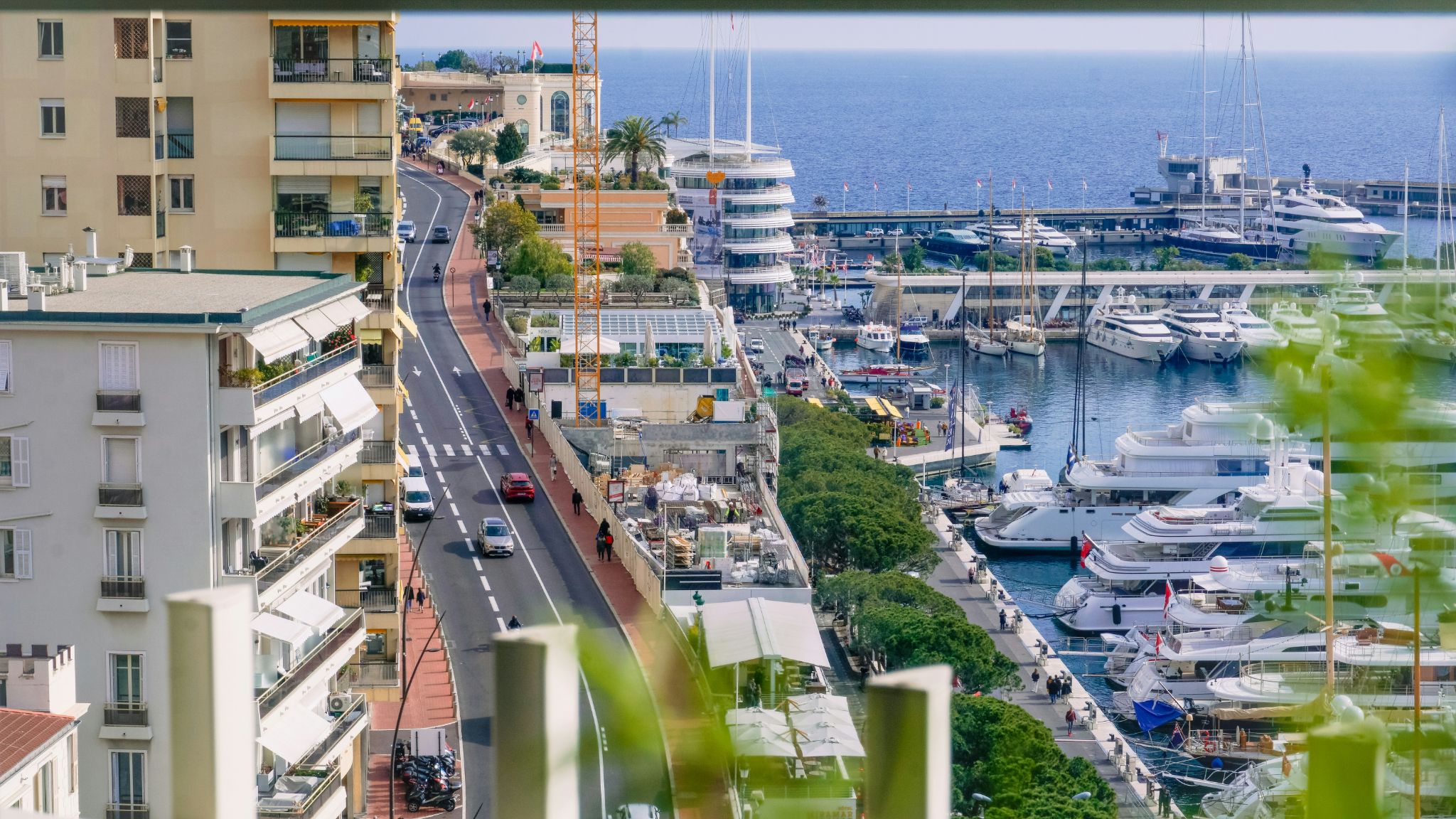
Choosing an international school in Monaco also means choosing a rhythm of life. Monte-Carlo, Fontvieille, Larvotto, La Condamine or the Jardin Exotique offer very different environments in terms of traffic, access to shops and daily commutes. The distance shown on a map is not enough: public lifts, slopes, the busiest roads and school timetables can significantly alter the actual travel time.
For young children, parents often place more importance on the simplicity of the daily route than on a few extra square metres. For more independent teenagers, access to public transport, sports activities and meeting places can become a priority. These trade-offs must be integrated from the very first property viewings.
The security and compactness of the Principality facilitate many journeys, but each family has its own constraints. Official statistics and practical information published by the authorities can provide a general framework; the final choice must above all be based on a route tested at real-life times and on the concrete organisation of the family week.
School results: prioritising official and dated data
Pass rates, exam averages or university destinations can change from one graduating class to another. A real estate article must not freeze an undated figure or turn a one-off result into a promise. Parents must consult the official results for the year in question and place them in the context of the number of pupils, the curriculum followed and the admission criteria.
Furthermore, results do not sum up the quality of a educational journey. Pedagogical continuity, languages, guidance, available options and the ability to support a change of country often matter more to an international family. These criteria are more durable and more directly linked to the life project.
The stability of the team, the clarity of the pedagogical project and the quality of communication with parents should also be observed. Here again, a visit and direct exchanges provide a more reliable vision than a reported reputation or an isolated ranking.
Choosing an international school in Monaco: the useful decision grid
A simple grid allows options to be compared: curriculum and diploma, languages, levels accommodated, admission procedures, class sizes, options in secondary school, activities, support, calendar and travel times from the envisaged neighbourhoods. This method avoids reducing the choice to the notoriety of an establishment.
For French-speaking families, maintaining a strong level in French can be decisive. For others, the priority will be English or continuity with a curriculum already started abroad. It is therefore necessary to verify the number of hours, the expected level and the real place of each language in the programme, without extrapolating from a simple mention of bilingualism.
Finally, specific constraints — intensive sport, support needs, parents' professional mobility or a precise university project — must be addressed from the very first exchange with the school. The more explicit these constraints are, the easier it is to then build a truly coherent real estate search.
Integrating school choice into real estate specifications
At MyCrown Estates, we observe that schooling often structures families' life projects even before the search for surface area or floor level. We therefore integrate this dimension into the residential selection: neighbourhoods compatible with journeys, space requirements according to the age of the children, proximity to activities and the family's daily organisation.
Our role remains real estate. We can put travel times and the characteristics of neighbourhoods into perspective, but information regarding curricula, admissions, diplomas or availability must be confirmed directly with the establishments concerned. This clear separation avoids any ambiguity and allows each professional to remain within their field of competence.
Once the school constraints are specified, the search can focus on properties that are truly compatible with the family project. To discover available properties and more confidential solutions, the dedicated pages of MyCrown Estates allow progress in the search without multiplying external intermediaries in the editorial content.
Practical questions for families
When should one start the enrolment process in an international school in Monaco?
It is preferable to make enquiries several months before the targeted school term. Calendars, requested documents, evaluations and availability vary according to establishments and levels; they must therefore be verified directly for the year concerned.
How to verify the recognition of an international diploma or curriculum?
It is necessary to consult the official information of the curriculum followed and the admission conditions of the universities or school systems envisaged next. Recognition can depend on the country, the pathway and the subjects chosen; general assertions should therefore be avoided.
Can an international school adapt to a high-level student-athlete?
Some establishments provide for arrangements, but their modalities differ. Families must ask how training, travel, absences, make-up sessions and assessments are managed before taking this flexibility for granted.
Which neighbourhood to choose when the school is a priority criterion?
There is no single answer. La Condamine, Monte-Carlo, Fontvieille, Larvotto or the Jardin Exotique can be suitable depending on the establishment, the age of the children and the mode of transport. Ideally, the route should be tested at school times before freezing the real estate choice.
How to compare the teaching of French and English?
One must look at the main language of instruction, the number of hours dedicated to each language, the expected level and the support systems. A mention of bilingualism is not enough to accurately describe the language level offered at different ages.
How does MyCrown Estates assist families in settling in Monaco?
MyCrown Estates helps families select residential properties consistent with the location of the chosen school and their lifestyle criteria. Our team also coordinates the administrative steps associated with settling in the Monegasque territory.
Read also: Living in Monaco · Settling in Monaco