Taxation in Monaco: what a future resident needs to check

Published on:

Monaco taxation is notably characterised by the absence of personal income tax for most residents, subject to rules specific to certain nationalities and potential obligations in other jurisdictions. Any asset planning decision must be validated on a case-by-case basis.
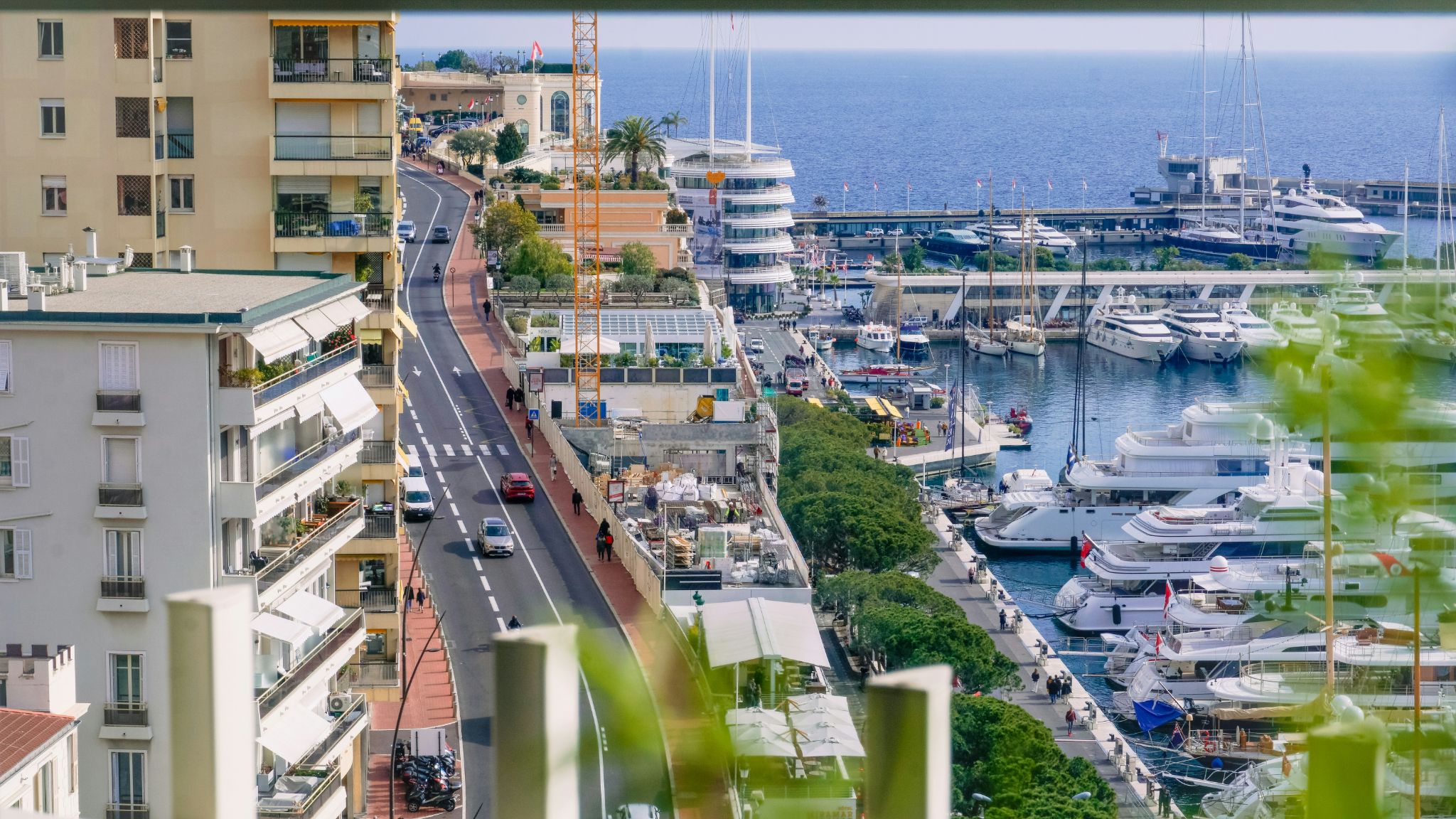
In the shadow of the Rock, between the sobriety of Monte-Carlo's palazzi and the serenity of the port of La Condamine, the Principality of Monaco has built over time a reputation that goes far beyond its ashlar stone facades. Its tax system, discreet yet precisely structured, is one of the profound reasons why residents from all over the world choose to establish their lives in this unique territory. Understanding Monaco's tax advantages involves grasping the nuances of a jurisdiction that is not an island, but functions as a world of its own.
Monaco taxation: a specific framework depending on the profile
The Monaco territory covers barely two square kilometres, yet it hosts one of the highest concentrations of high-net-worth residents in the world. This is not by chance: for decades, the Principality has opted for a public funding model that relies essentially on consumption and economic activity, rather than on direct taxation of individuals.
The Monaco tax system is distinguished above all by what it does not contain: no direct tax on personal income, no wealth tax, no inheritance tax in direct line. This tax architecture, established over several generations, explains why entrepreneurs, patrician families, and wealth managers from all over the world have established their homes between Fontvieille and Larvotto.
However, Monaco is not a legal vacuum. The Principality has a precise legal framework, overseen by Monégasque institutions, and a historic tax treaty with France that introduces important nuances for French nationals. Understanding this framework in its entirety is essential before any decision to reside in Monaco or set up a business in the Monégasque territory.
Income tax: general principle and the French exception
The most well-known principle of the tax advantages in Monaco remains the absence of income tax for residents. Individuals domiciled in Monaco territory are not subject to income tax, regardless of the source of their income: dividends, interest, rental income received abroad, income from movable capital — none of these flows are taxed at the individual level in Monaco.
This absence of income tax applies fully to all residents, with the notable exception of French nationals. The Franco-Monégasque tax treaty of 1963 stipulates indeed that French citizens established in Monaco remain subject to French income tax, at the same rates as in France. This is a fundamental nuance that any French candidate for residency must integrate before any real estate project.
For non-French nationals, however — whether they are British, Belgian, Italian, Brazilian, or of any other nationality — residency in Monaco offers a unique situation: the entirety of their global income escapes all direct taxation in Monaco territory. This reality, well known to wealth managers who orbit the avenues of Monte-Carlo, constitutes the foundation of the Principality's residential attractiveness.
Corporate taxation: scope of application to be verified at the project phase
Corporate tax exists in Monaco for certain companies, notably depending on the nature of the activity and the share of turnover generated outside of Monaco. The thresholds, territoriality rules, exemptions, and applicable rates must be verified with official sources at the time of analysis; a real estate article should not fix a rate as if it were permanent.
Certain companies may fall outside the scope of corporate tax depending on their activity and operating conditions. This qualification falls under corporate taxation and must be confirmed by a competent professional based on the regulations in force.
For a company with international activity, Monaco taxation should never be summarised by a single percentage of turnover or an isolated rate. The structure of the activity, the flows, and the applicable rules must be analysed on a case-by-case basis.
Value added tax: alignment with France
Value added tax is applicable in Monaco, and its regime is aligned with that of France under the customs union linking the two States. The rates applied are identical to those in force in France: standard rate at 20%, intermediate rate at 10%, reduced rate at 5.5%. This harmonisation of value added tax reflects deep economic integration between Monaco and its neighbour, without however erasing the specificities unique to Monégasque law.
For companies established in Monaco, the management of VAT follows administrative procedures distinct from those applicable in France, even if the basic principles are common. The Monégasque tax services have their own reporting procedures, and compliance with these rules is essential for any company active in the territory. Reporting obligations must be met with the same rigour as in France, within a distinct institutional framework.
Inheritance and gift taxes: relationship and asset location matter
Inheritance taxes are often a decisive component in the asset strategies of high-net-worth families. In Monaco, the regime is particularly favourable: between spouses and between direct descendants, inheritance taxes are nil. This total absence of taxes on transfers in direct line represents a considerable asset advantage for families wishing to organise the transfer of their real estate, movable, or financial wealth over generations.
In indirect line or between unrelated persons, taxes apply according to a progressive scale, although the rates remain moderate compared to European standards. Gifts are subject to a similar regime, with rates varying according to the degree of relationship between donor and donee. These provisions apply to assets located in Monaco territory and concern residents of the Principality.
For families considering establishing their residence in Monaco — whether in apartments overlooking the port of La Condamine or in secluded areas near the Jardin Exotique — this inheritance architecture represents a fundamental argument, far beyond quality of life considerations. The sustainability of family wealth is thus durably reinforced over several generations.
Holding costs: do not reduce real estate simply to direct taxes
One of the least publicised but equally significant tax advantages in Monaco concerns local taxation on real estate wealth. There is no property tax or housing tax in Monaco. Property owners in the Monegasque territory — whether it is an apartment in the heart of Monte-Carlo or a commercial space in Fontvieille — do not bear these levies, which constitute a significant recurring burden in France.
This absence of recurring taxation on real estate ownership fundamentally alters the logic of property holding costs in Monaco. The annual cost of holding is thus reduced to its essential components: building charges, potential management fees, insurance — without any annual local tax deduction. This is a reality that savvy buyers integrate into their overall wealth analysis.
Indeed, this is one of the reasons why the Monegasque real estate agency MyCrown Estates assists its clients with a comprehensive wealth and tax analysis, well before presenting the first viewing. Monegasque real estate is not just about the act of acquisition: it is part of a long-term strategy that encompasses annual taxation, succession, and liquidity.
Disposal of a property: have the taxation checked based on the seller and their residence
The taxation of a real estate sale depends on the seller's situation, their tax residence, the holding structure, and other jurisdictions involved. It would be risky to present a general exemption on capital gains without analysing the specific case.
The absence of certain Monegasque taxes does not mean that a sale is tax-neutral for all sellers. Double tax treaties and the rules of the country of residence may have consequences that must be studied before the sale.
For French nationals residing in Monaco, real estate capital gains realised on properties located in France remain taxable under French rules. The situation of each resident must be analysed individually, with the support of competent legal and tax advisors in Monegasque law and private international law.
Administrative residence and tax residence: two distinct subjects
Obtaining residence in Monaco requires meeting a set of precise conditions, defined by the authorities of the Principality. First of all, one must have accommodation — owned or rented — in Monaco, and justify sufficient resources to support oneself without requesting Monegasque social services. The Principality attaches particular importance to the financial strength of its new residents.
The concept of tax domicile is at the heart of discussions between residents and their advisors. For residence in Monaco to be tax-effective, one must not only be officially domiciled in Monaco but also have the centre of their vital interests there. This criterion implies an effective physical presence and real ties to the Monegasque territory — which families settled in the contemporary apartments of Larvotto or the refined spaces of La Condamine experience daily.
To explore the practical aspects of tax residence in Monaco, it is recommended to rely on professionals fluent in both Monegasque law and applicable international treaties. The Monegasque residence permit is renewable and recognised by most foreign tax administrations, provided that the actual conditions of domicile are well established and documented.
France-Monaco tax treaty: nuances that must not be overlooked
The tax treaty between France and Monaco, signed in 1963 and subsequently amended, is one of the most important texts to know for any French national considering residence in Monaco. Its content is precise: French citizens who establish residency in Monaco remain subject to French income tax and profit tax at the same rates as in France, as if they resided on French territory.
This treaty also covers inheritance tax on property located in France and French-sourced income. Its effect is to neutralise a large part of the tax benefits that Monegasque residence would naturally provide to a French national. This reality explains why Monaco is particularly attractive for third-country nationals wishing to optimise their tax situation within an established legal framework.
According to data published by the official statistics of the Principality, the Principality is home to residents from more than 130 different nationalities. The diversity of this resident population reflects the international attractiveness of the Monegasque model, well beyond French nationals alone. Each nationality presents a distinct tax equation, which must be analysed accurately before any residency project.
Distinguishing general information from tax advice
Understanding Monaco's tax advantages in their entirety requires placing them within a comprehensive life project: choice of district, nature of the property, holding structure, international wealth organisation. These questions deserve precise and personalised support, far from generalisations. Taxation in Monaco is a coherent system, but its effects vary according to the profile and nationality of each resident.
At MyCrown Estates, we work with clients who have made Monaco a well-considered choice. Whether it is for an apartment overlooking the sea from the heights of Monte-Carlo, a living space in the residential calm of Fontvieille, or a rare property at the foot of the Exotic Garden, each situation is unique. We coordinate, where useful, our real estate expertise with that of tax and legal advisors specialised in Monegasque law.
For families wishing to deepen their thinking on international wealth structures, our knowledge articulates naturally with family offices active in Monaco and their integrated approach to wealth management. For a contemporary reading of current dynamics, our analysis of the Monegasque real estate market in 2026 offers precise insight into price and transaction trends. Explore the overview of Monegasque districts to better understand the specificities of each address, then contact our team via our website for an initial confidential conversation about your project.
Tax questions to validate with an advisor
Do French nationals benefit from tax advantages in Monaco?
French nationals fall under a specific regime arising from the 1963 Franco-Monegasque tax treaty, subject to exceptions and specific situations provided for by the texts. It is preferable to avoid generalising beyond this principle without individual analysis.
What taxes apply when purchasing real estate in Monaco?
The acquisition of real estate in Monaco is subject to registration fees at a fixed rate, payable by the buyer. On the other hand, there is no property tax or housing tax for resident owners in Monaco.
Are inheritance taxes zero between spouses in Monaco?
Between spouses and in direct line, inheritance taxes are zero in Monaco. Progressive rates apply between unrelated individuals, but they remain moderate compared to European standards.
Must one physically reside in Monaco to benefit from its taxation?
A tax residence is not determined by a single address or a single threshold. Actual presence, the home, the centre of activities, and the rules of other concerned States must be analysed. For an international situation, the result must be validated by a qualified tax advisor.
Do companies based in Monaco pay tax on profits?
Tax on profits concerns certain companies depending on their activity and the share of turnover generated outside Monaco. The rules and the rate in force must be verified at the time of the project through official sources or with a competent advisor.
Which district of Monaco is best suited to establish a main residence?
Monte-Carlo, Larvotto, Fontvieille, La Condamine, and the heights near the Exotic Garden each offer a distinct residential environment. The choice depends on the resident's profile, lifestyle, and the nature of the property sought.
Also read: Moving to Monaco · Family office in Monaco
The legal, administrative, banking, or tax information presented here is general and does not replace advice tailored to your situation.